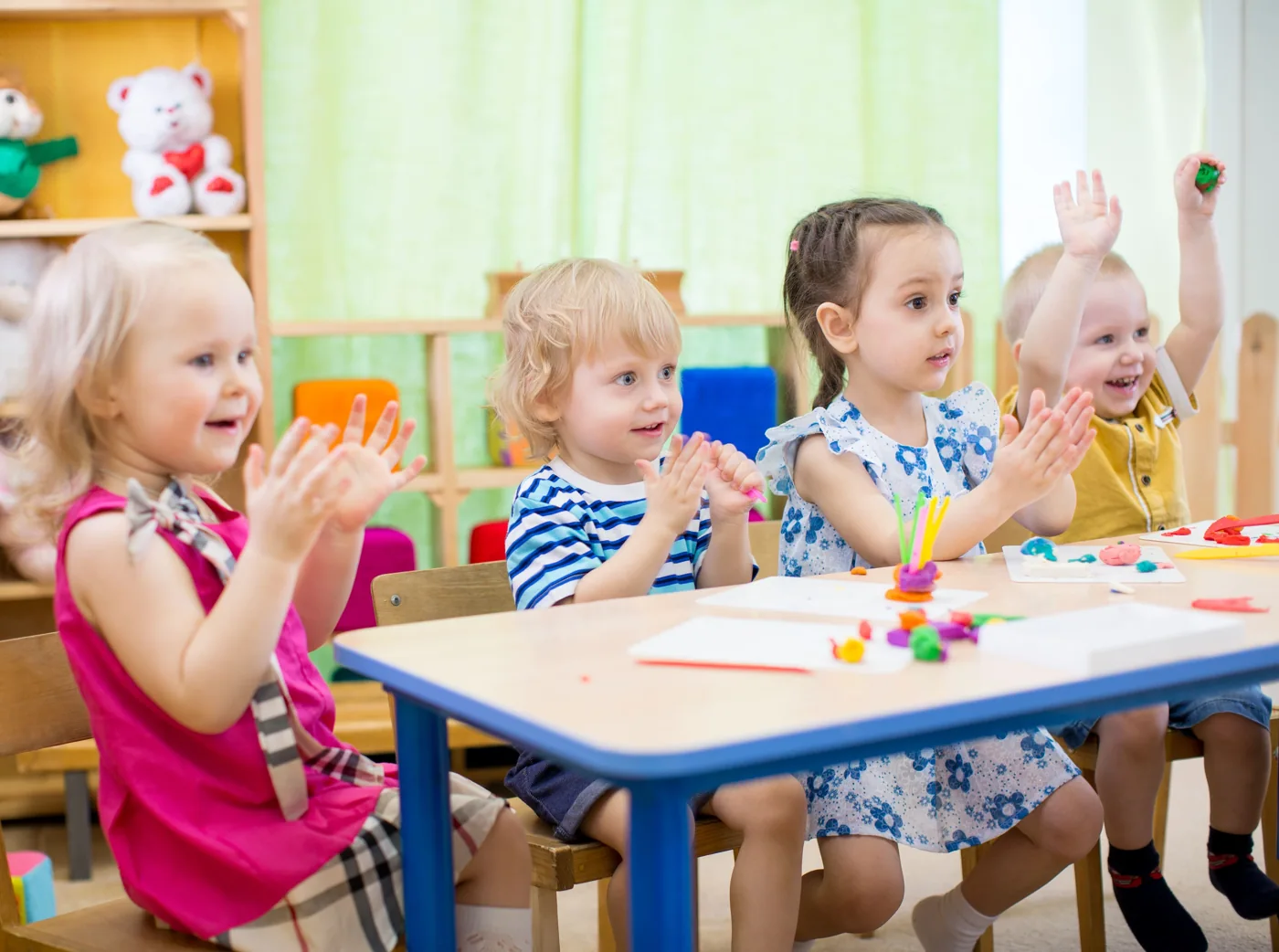
Preschool Program for 3-Year-Olds

A preschool program for 3 year olds should feel like the perfect next step after toddlerhood. At age three, children are becoming more independent, more social, and more curious about how the world works. Many families are also comparing daycare, day care, childcare, and child care options and looking for a program that supports both nurturing care and meaningful early learning.
At Great Beginnings, our Preschool Program for 3-year-olds builds early learning skills through hands-on play, music, art, and Christian-based character development.
Schedule a tour and choose a day and time that works best for your family.
What a Preschool Program for 3-Year-Olds Looks Like
Why age three feels like a big leap from toddlerhood
Three-year-olds change quickly. They often start using more words, playing longer, and caring more about what friends are doing. This is also an age when children benefit from gentle structure. They do not need pressure, but they do thrive when the day has a predictable rhythm, teachers have calm expectations, and learning happens naturally through play.
A warm start for children who are becoming more independent
Independence at age three shows up in small moments. Carrying their own items, trying to solve problems without help, wanting to do it myself, and choosing activities with confidence. A strong preschool classroom supports these moments with encouragement, consistency, and routines that help children feel secure.
Parent Quick Answers
-
A preschool program for 3 year olds should balance early learning and care through play, routines, and consistent guidance.
-
If you are comparing daycare and preschool, look for a classroom that supports social skills, language, and independence.
-
Many families want day care that includes meaningful early learning without pushing children too fast.
-
High quality childcare at age three includes hands-on activities, movement, and a predictable daily rhythm.
-
Child care is often smoother when transitions are gentle, consistent, and age-appropriate.
-
At age three, growth often looks like better communication, stronger routines, and more confidence with peers.
-
Schedule a tour and choose a day and time that works best for your family.
-
Want to see the full program path across ages? Visit Programs
Program Highlights for Age 3
-
Hands-on learning that supports early language, listening, and problem-solving through play
-
Learning centers that encourage independence, curiosity, and longer attention during activities
-
Music and movement that supports focus, coordination, and classroom routines
-
Art and creativity that builds fine-motor skills and confidence through process over perfection
-
Social growth support through sharing, turn-taking, and friendship practice with teacher guidance
-
Gentle routines and transitions that help children feel secure throughout the day
-
Christian-based character development modeled through kindness, gratitude, respect, and helpfulness
-
Many parents appreciate our clean-environment approach. Learn more on Chemical-Free Schools.
-
Clear next step for families: Schedule a Tour using the live calendar
-
Is This Program a Fit?
Check the boxes that feel true for your family:
☐ My child is three (or close to three) and ready for a structured preschool classroom experience
☐ We want a balance of nurturing care and early learning through play, not pressure
☐ My child would benefit from practicing routines, transitions, and independence with support
☐ Social growth (sharing, listening, taking turns) is a big goal this year
☐ We value a program that includes music, movement, and hands-on learning
☐ We want gentle guidance that teaches what to do next, not just what to stop doing
☐ We appreciate faith-based values expressed in an age-appropriate way
☐ We are ready to schedule a tour and pick a day and time from the live calendar

Developmental Milestones Many 3-Year-Olds Are Working On
Communication growth and early conversations
At age three, language grows quickly. Many children start using longer phrases, asking more questions, and describing what they want with more detail. In a preschool program, children practice communication all day through stories, songs, teacher conversations, and peer play. This supports vocabulary growth, listening skills, and the confidence to speak up in a group setting.
You may also notice your child becoming better at expressing needs and preferences. Instead of getting frustrated as quickly, many three-year-olds begin using more words to explain what is wrong or what they want next. A classroom environment gives repeated practice with those real-life moments, especially during center play, group activities, and transitions.
Motor skills, attention, and problem solving through play
Three-year-olds often enjoy building, sorting, pretending, and experimenting. These play moments matter. They support early reasoning, longer attention, and the I can do it confidence that helps children try new skills. Many hands-on activities also support fine-motor development through tasks like painting, gluing, building, and simple puzzles.
At this age, you are often watching your child move from quick bouncing between activities to more focused engagement. A strong preschool setting supports that shift by offering a variety of activities while also helping children practice sticking with something long enough to feel successful.
Social and Emotional Growth Goals at Age 3
Handling big feelings with calm routines
Three-year-olds can still have big feelings. The difference is they are starting to learn tools. Calm, consistent routines help children know what comes next, and that predictability can reduce frustration. Teachers guide children through transitions with clear expectations and supportive language so children learn what to do next.
Over time, many families notice that their child becomes more comfortable with drop-off, transitions, and group expectations because the day feels consistent and safe. This matters whether you call it preschool, child care, childcare, daycare, or day care. The daily rhythm is what helps children settle.

Sharing, turn-taking, and friendship skills
This is one of the biggest reasons parents look for preschool, daycare, or childcare at age three. Social development becomes more noticeable, and children often care more about what peers think. A strong classroom helps children practice friendship skills with gentle teacher support, including taking turns, using kind words, and joining group play.
It is also normal for children to still struggle with sharing and patience. The goal is not perfection. The goal is practice, repetition, and gentle guidance so kids learn what to do next when a toy is taken, when a friend says no, or when they feel left out.
Centers-Based Learning
Choice time, small group moments, and teacher-guided learning
Many three-year-old classrooms use learning centers because children learn best when they can move, touch, explore, and repeat. Centers encourage decision-making and confidence, while still giving teachers structure to support early learning goals. Children may rotate through activities that include building, books, imaginative play, early learning materials, and creative stations.
Centers also allow teachers to guide learning without forcing long sit-down time. At age three, learning is often strongest when it is hands-on and active. This is where early skills like listening, matching, sorting, and early problem solving can develop naturally.
Building independence through simple responsibilities
Independence at age three should be supported in small, safe ways. That can include simple habits like cleaning up, washing hands, putting items where they belong, and completing a task before moving on. These routines build confidence and help children feel capable in a group environment.
For many parents, these small responsibilities are one of the biggest benefits of preschool or childcare at age three. Children start taking pride in being able to do things on their own, and that pride often carries home too.
Music and Movement That Supports Learning
Movement is part of learning at age three. Music and movement support listening, rhythm, memory, and transitions. Many children do better with group routines when the day includes regular movement breaks and music moments that help energy levels stay balanced.
Music can also support language development and early listening skills. Repetition through songs often helps children remember routines and participate more confidently, even if they are shy at first.
Art and Creativity
Process over perfection
At age three, art is not about perfect results. It is about confidence, creativity, and skill-building. Cutting practice, painting, gluing, drawing, and hands-on projects strengthen fine-motor skills and help children practice following steps while still expressing themselves.
Art also supports patience and attention in an age-appropriate way. It gives children a chance to start something, work through it, and finish with a sense of pride, even when the result looks messy. That is part of learning.

Choosing the Best Campus for Your Family
This toddler program page is designed for all campuses. The best way to choose a location is to tour, ask questions, and get a feel for the classroom environment.
You can explore each campus preschool page here:
You can also browse program overviews by campus here:
And for a full overview of all programs, visit: Programs
Ready to Visit? Schedule a Tour
The best way to know if a preschool program for 3-year-olds is the right fit is to visit. You can schedule a tour online and choose a day and time that works best for your family.
To schedule, use the Schedule Tour button anywhere on this page to choose a day and time that works for you.
If your child is approaching the next stage, you may also want to explore:

Frequently Asked Questions
What age is this preschool program designed for?
This program is designed for children who are age three.
Is this more like daycare or preschool?
Many families view it as both: nurturing care plus play-based preschool learning.
What do 3-year-olds learn in childcare at this age?
Children learn through play, routines, and relationships, building language, social skills, and independence.
Is the preschool program faith-based?
Yes. Great Beginnings is a Christian preschool and child care community with age-appropriate character development.
Can I schedule a tour online?
Yes. Use the Schedule a Tour option to choose a day and time that works best for your family.