
Words, gestures & connection
Conversations, picture books, songs, and naming everyday objects build early language. Teachers help toddlers express needs, make choices, and practice alternatives to grabbing or crying.
Ages 1–2
Little steps. Big discoveries. Loving care, familiar routines, and hands-on play help your toddler feel secure enough to try something new.
Glendale & Goodyear, Arizona
Find your campus & tour Explore all programs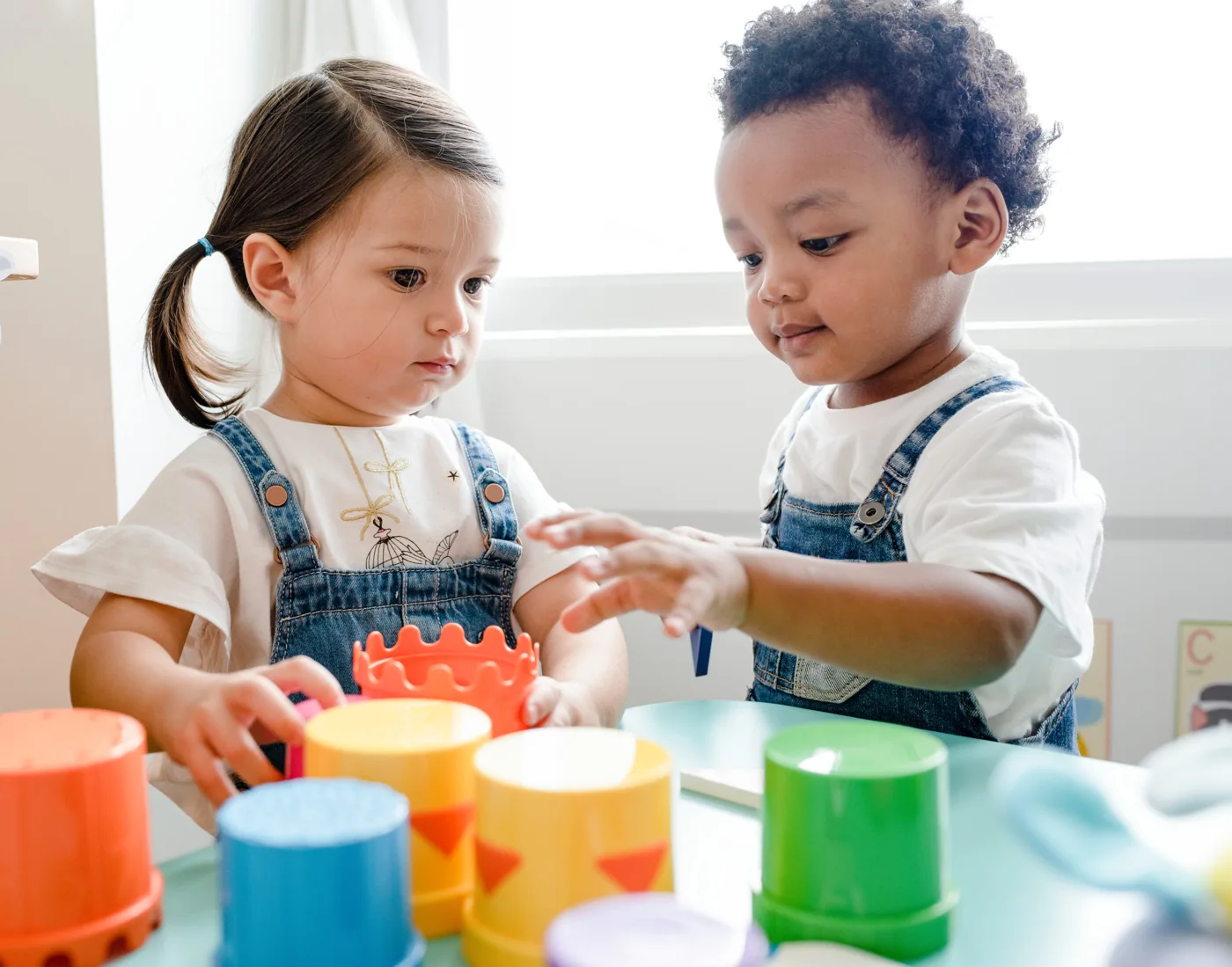
Ages 1–2
At one and two, children learn through movement, repetition, and relationships. Our Christian toddler program combines nurturing childcare with early learning at our Glendale and Goodyear campuses.
Patient teachers help children settle in, practice simple choices, and find words for what they need. A predictable day gives toddlers time to explore without rushing them toward the next stage.
Little discoveries, every day
Conversations, picture books, songs, and naming everyday objects build early language. Teachers help toddlers express needs, make choices, and practice alternatives to grabbing or crying.
Stacking, scooping, grasping, and simple art invite toddlers to explore textures, solve small problems, and strengthen coordination. Activities make room for curiosity and repetition.
Waiting, sharing, and taking turns take practice. Teachers model gentle hands, use calm redirection, and help toddlers rejoin play after a difficult moment.
Putting toys away, finding belongings, and following simple directions give children supported opportunities to try things for themselves. Small steps count.
A rhythm they can count on
Classroom timing can vary, but familiar routines help your child understand what comes next. The day makes space for movement, learning, rest, and connection.
Curriculum & daily scheduleGentle arrival routines and an inviting activity help toddlers reconnect with their teachers at drop-off.
Hands-on play, stories, songs, and teacher conversations support language and early problem-solving.
Calm transitions, meal routines, and quieter moments give young children time to rest and regroup.
Outdoor time and movement offer chances to practice coordination and enjoy being active.
Christ at the heart of every day
For toddlers, Christian character begins in everyday relationships. Teachers model kindness, gratitude, patience, and respect through gentle words and caring responses. Little moments—being kind to a friend or using gentle hands—become opportunities to practice God’s love.
Our Christian faith & valuesProgress, one day at a time
Development is individual. These are skills we support through daily practice, not milestones children must master before joining the classroom.
Teachers & families, together
Some toddlers settle in quickly; others need more time. Teachers offer reassurance, familiar cues, and engaging play during separation and drop-off. We guide behavior with patient, age-appropriate expectations and make room for helpful conversations with families about adjustment and progress.
Attentive supervision and clean learning spaces are part of our approach to care. Ask us about classroom routines, drop-off, and pick-up during your visit.
Room to grow
Christian preschool and childcare for children ages 1–5, with experienced teachers and hands-on learning at every stage.
AGES 1–2
Gentle routines and everyday discoveries.
Explore ToddlersAGE 3
Friendships, creativity, and playful learning.
Explore PreschoolAGES 4–5
Confidence and skills for kindergarten.
Explore Pre-KA few things families ask
Bring your questions. We’ll help you get to know the classroom and our approach.
Choose a campus to visitOur toddler program is designed for children ages 1–2. Contact your preferred campus to discuss your child’s needs and current classroom availability.
The day combines play-based learning, early language, movement, meals and rest, and social-emotional growth within familiar routines.
Teachers use calm redirection, short directions, and consistent expectations. Children practice gentle hands, waiting, and taking turns with patient support.
Teachers offer reassurance, familiar routines, and engaging activities. Every child adjusts at a different pace; we do not promise an immediate transition.
Yes. Christian values are modeled through kindness, gratitude, respectful guidance, and everyday opportunities to care for others.
Yes. Choose Glendale or Goodyear below to schedule a tour, meet our team, and ask about the toddler classroom.
See where your child could grow
Choose Glendale or Goodyear to meet our teachers, explore a classroom, and ask about placement, tuition, and current availability.
Both campuses: Monday–Friday, 6:30 a.m.–5:30 p.m.
Closed Saturday and Sunday.
On the Faith Bible Church campus
17230 N 59th AveWelcoming West Valley families
13380 W Van Buren StOur Goodyear campus also welcomes families from nearby Litchfield Park.
Meet our teachers, explore a classroom, and ask about daily routines, tuition, and enrollment.
Choose your campus